Daimler Mercedes-Benz · Vehicle Subscription Concept
Daimler Vehicle Subscription Concept
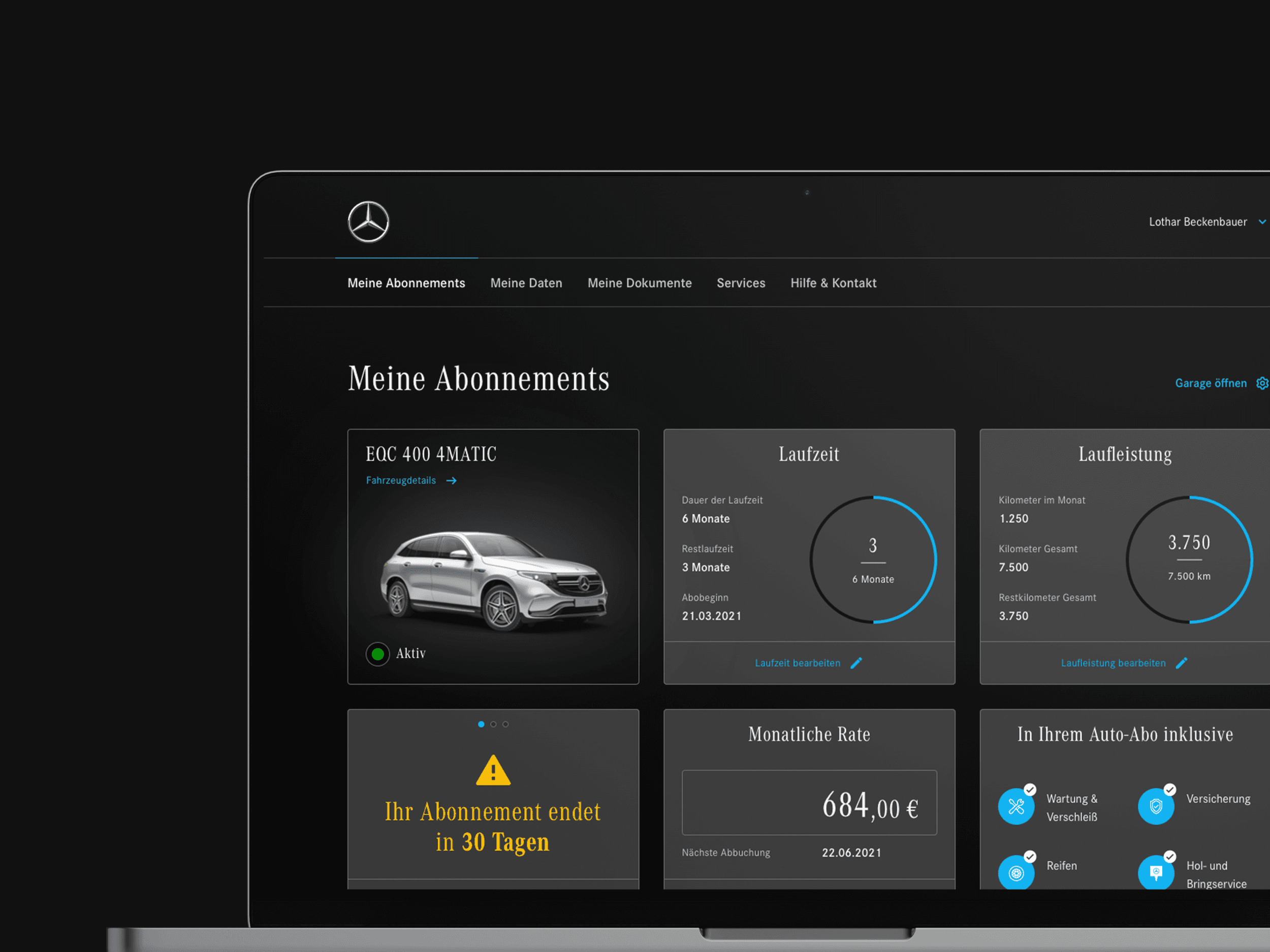
Daimler was exploring a vehicle subscription offer before the model was familiar to consumers or fully defined internally. As a supporting case, this shows how I led UX definition for a two-month concept that helped drivers understand cost, commitment, responsibility, delivery, and post-subscription management before choosing a vehicle or plan.
Best read as an earlier service-design example: I structured an unfamiliar mobility model across acquisition, delivery, and lifecycle management under senior client scrutiny.
- Project type
- Greenfield vehicle subscription concept
- Timeframe
- Two-month concept engagement
- Role
- Experience Design Lead, Deloitte Digital Germany
- Scope
- Selection through lifecycle management on desktop and mobile web
- Status
- Pre-launch concept, approved and tested
- Outcome
- Shared service model and testing findings for MVP definition
The Problem
Clarifying a new subscription model end to end
The brief was as much about clarifying the product as designing the interface.
Drivers had to consider a new way to access a car: more flexible than ownership or leasing, but less familiar than either. Before they could choose a vehicle or plan, they needed clear answers about cost, commitment, responsibility, delivery, and what they would manage after subscribing.
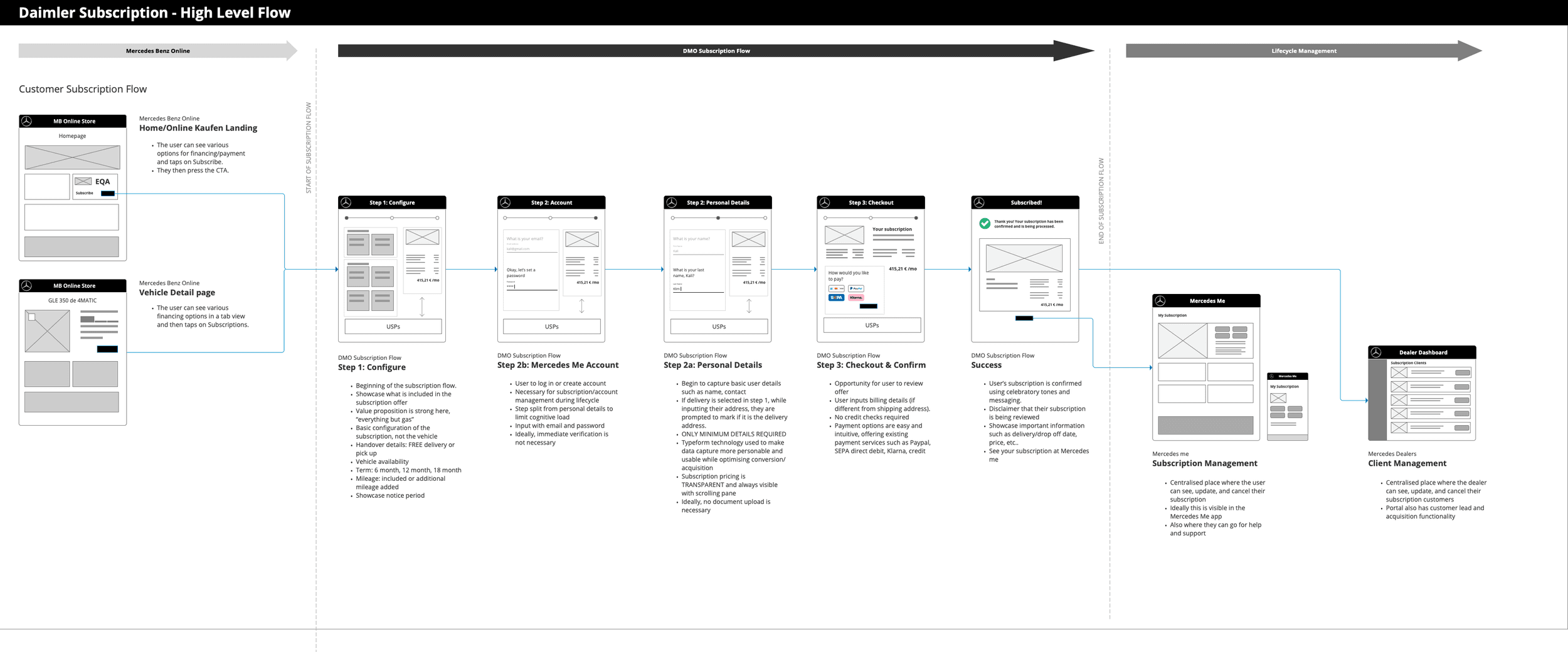
The scope went beyond an acquisition funnel. I had to define a journey that made the service understandable from vehicle selection through delivery and ongoing management while the business requirements were still evolving. I used that journey to give users, executives, and delivery partners one structure to evaluate together.
Scope proof
My Role
Leading UX definition with clear ownership boundaries
I led UX definition on a small cross-functional concept team and presented the work directly to Daimler and Mercedes-Benz executives.
What I owned
As Experience Design Lead at Deloitte Digital Germany, I owned research synthesis, competitive review, journey and flow definition, wireframes, and executive presentations.
What stayed shared
The team included an automotive strategist, systems architect, UI designer, and design leadership. The business model, visual execution, and any later MVP delivery were shared or outside my direct ownership.
Key Decisions
The most important calls were about clarity and commitment
The strongest part of the work was choosing where users needed clarity, where Daimler needed certainty, and where the flow could reduce friction without hiding responsibility.
Define the full relationship, not just the signup
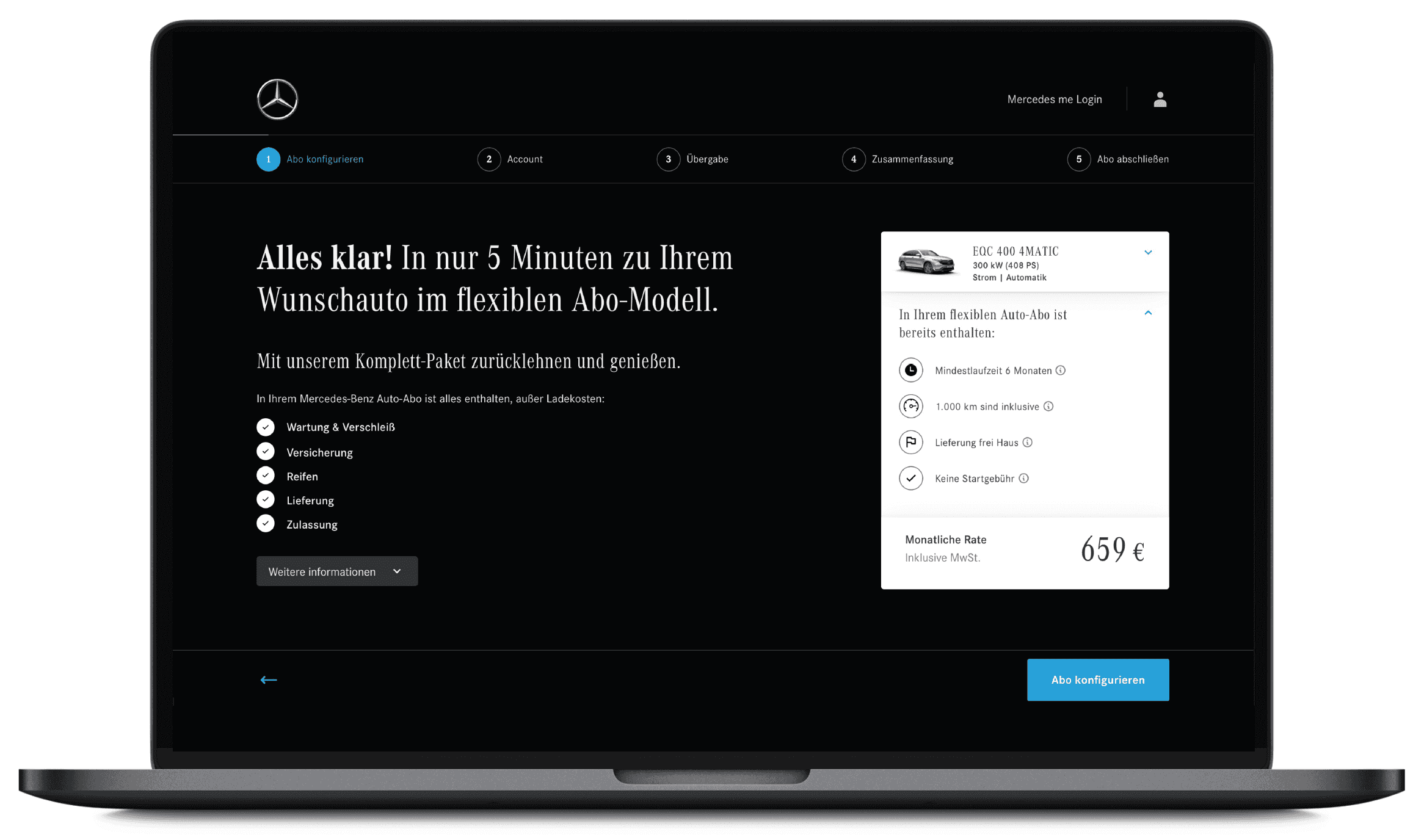
I treated sign-up as the first service moment. The journey connected vehicle selection, configuration, account setup, verification, delivery, Mercedes Me, dealer handoffs, and ongoing management so users and client stakeholders could evaluate one service.
Lower the barrier to commitment
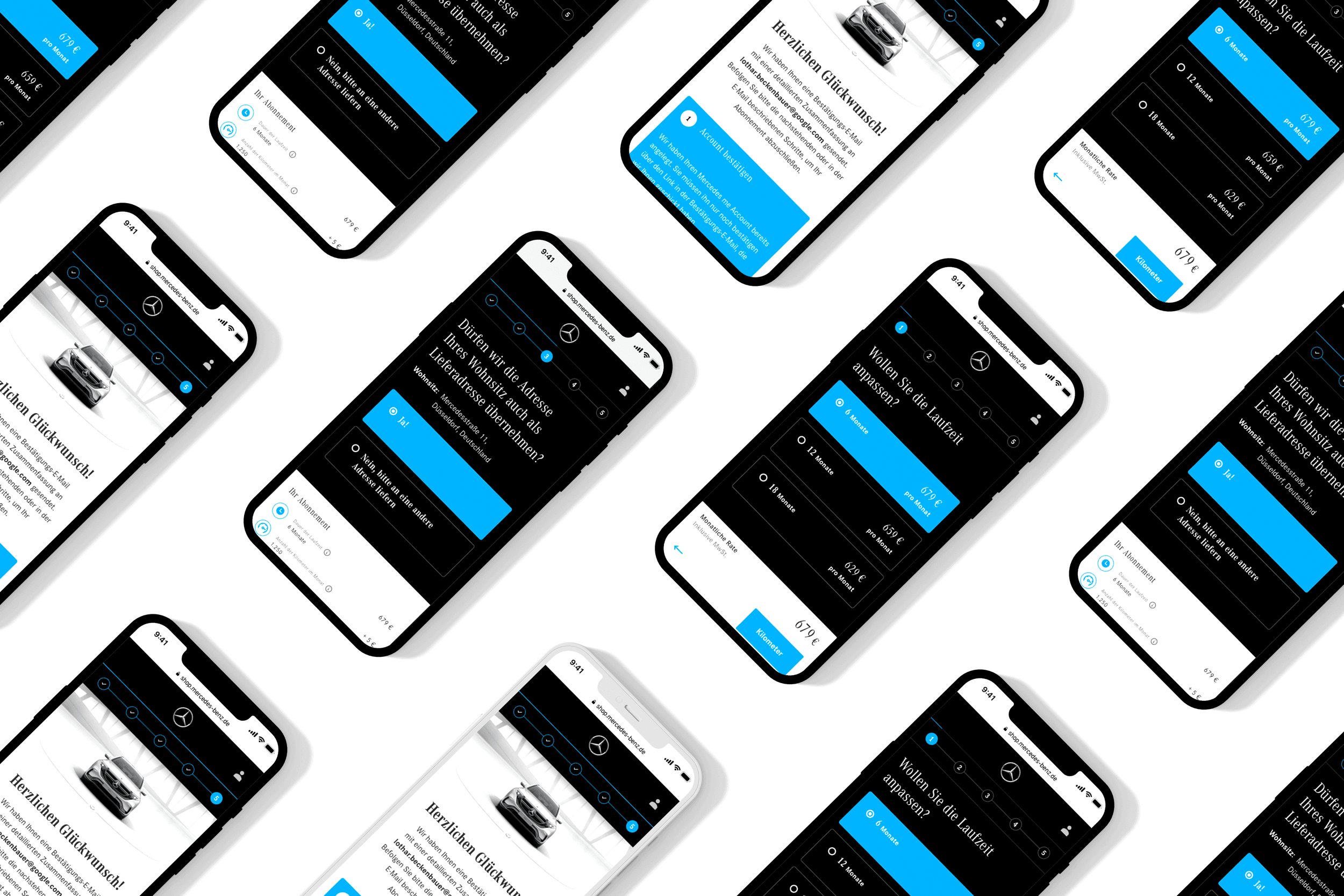
The key call was to separate intent from eligibility. Users could understand and choose the subscription first; Daimler could still verify identity before delivery. That reduced early data-entry friction without removing a necessary trust and compliance step.
Use testing to tighten high-friction moments
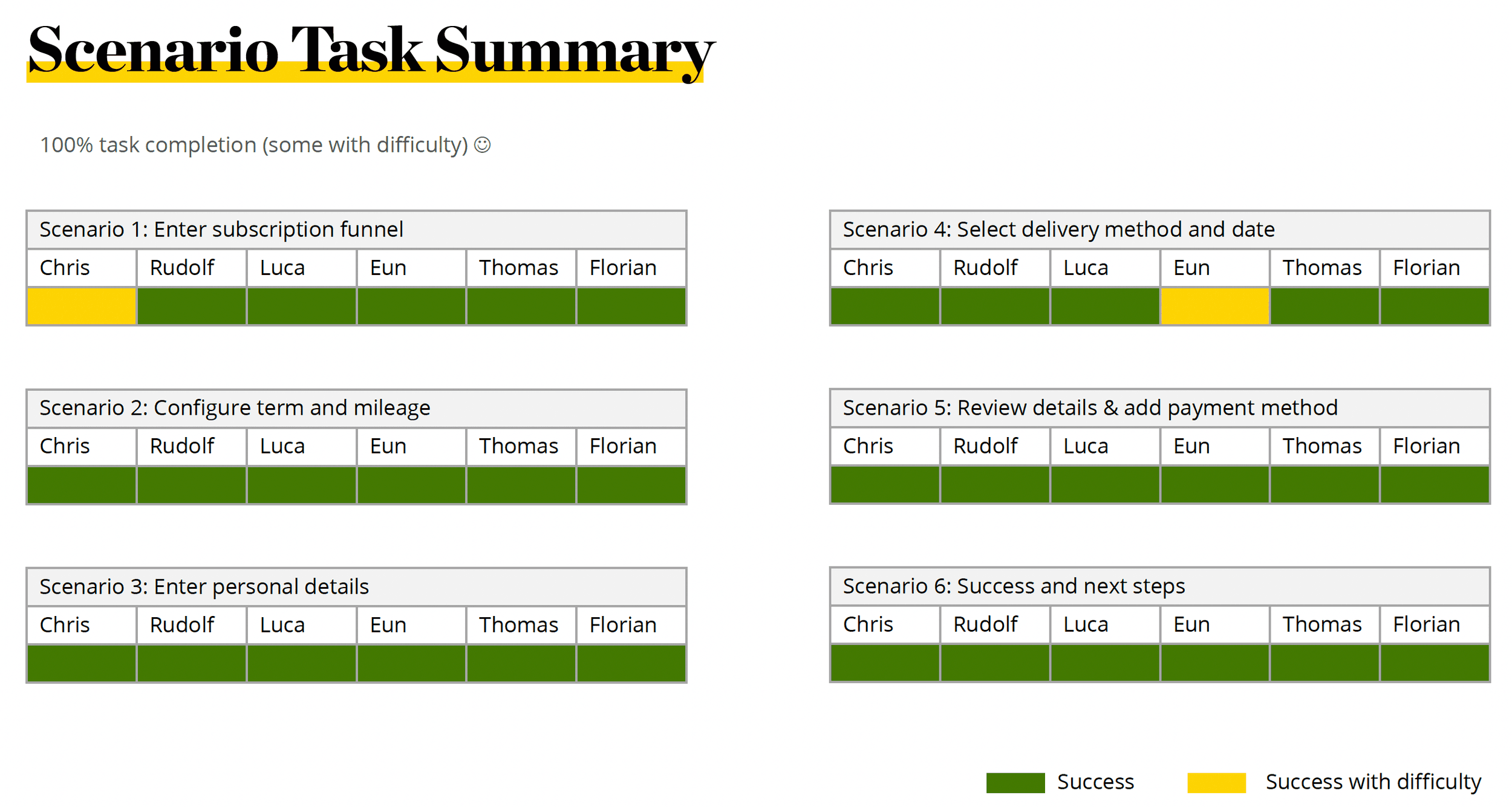
Testing pushed specific refinements rather than broad redesign: clearer navigation, payment before review, better step progression, stronger policy visibility, and clearer explanation of lifecycle actions after sign-up.
Decision proof
Outcome
What the concept clarified
The work aligned Daimler around a testable service model and exposed the points that needed refinement before MVP definition.
Testing with seven relevant participants was too light to prove market demand. It gave the team useful direction, confirmed that the service structure was understandable enough to continue, and showed where details still broke down.
Daimler left with a shared model for acquisition, checkout, delivery, and lifecycle management, plus specific issues to refine around navigation, payment and review order, policy visibility, step progression, and post-sign-up communication. Because this phase remained pre-launch, the strongest claim is validated learning: a shared acquisition-to-lifecycle model, concrete refinements, and a clearer path into MVP definition.
Validation evidence