Case Study · AutoScout24 · Search & Discovery
Declutter the List Page
Redesigning a high-traffic marketplace decision surface.
Buyers used AutoScout24's list card to compare vehicles; product teams used the same space for dealer, partner, and media goals. I led the design work across mWeb, desktop, iOS, and Android, starting with a bigger simplification test before working backward through commercial, platform, and detail-page tradeoffs.
- Outcome
- Rolled out after validation across buyer progression, partner, and platform tradeoffs
- Company
- AutoScout24
- Role
- Senior Product Designer to Principal Product Designer
- Scope
- mWeb, desktop, iOS, Android

Overview
A list card redesign aimed at faster decisions
The list card had to answer one question fast: is this vehicle worth opening? Research and behavioural analysis showed that competing signals slowed comparison, weakened hierarchy, and made buyers work too hard before the detail page.
Early research pointed to too many elements competing for attention, unclear hierarchy, and weak visual cues for what deserved a closer look.
The card still had to do three jobs: make the list feel scannable, provide enough context for fast comparison, and send buyers to the detail page when they had enough interest to go deeper.
That tradeoff mattered. More progression into the detail page could put more responsibility on that surface, but it also meant the card was doing a better job of moving buyers from casual scanning into active evaluation.
That meant reducing density, showing more offers above the fold, clarifying image behaviour, and reworking commercial entry points so internal demands did not all receive equal space.
The work was tested through A/B experiments and follow-up analysis across buyer progression and enquiry behaviour. Exact values are not included publicly, so the case focuses on the validation method, decision logic, and rollout direction.
Visual Proof
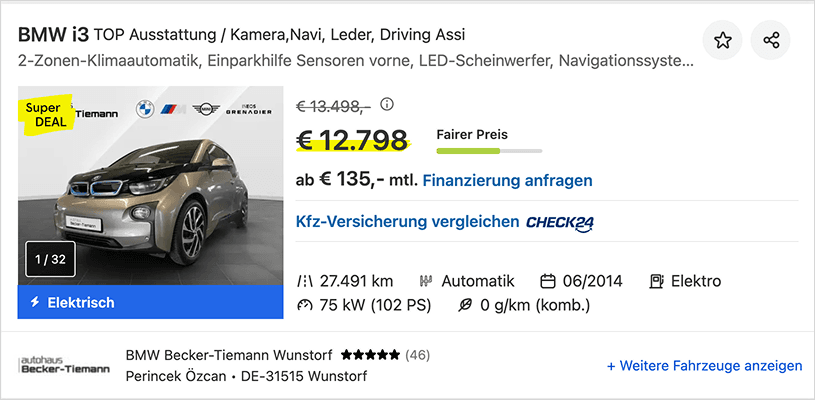
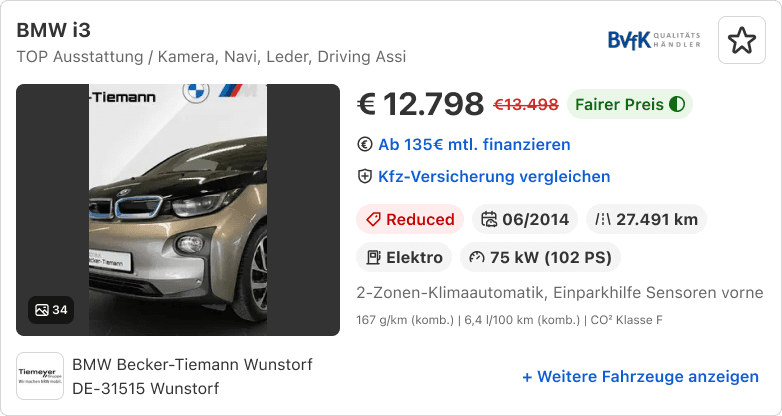
The desktop card made the hierarchy shift obvious
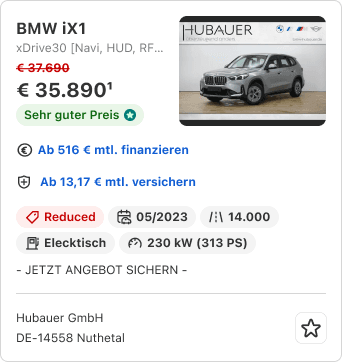
The desktop comparison shows the core move: fewer competing signals, stronger scanability, and a more disciplined balance between vehicle information and commercial surfaces.
Before
After
Strategic Context
This work sat inside a broader buyer reset
The list-card redesign sat inside a wider effort to improve how buyers moved from search results to confident decisions.
The team was improving guidance, selection, and trust across search and decision-making surfaces. The list page mattered because buyers needed to scan, compare, and progress from results before improvements elsewhere in the journey could matter.
This case focuses on the card because it became the surface where buyer needs, commercial entry points, and platform differences had to be reconciled.
Why This Mattered
This was a marketplace prioritisation problem
A small hierarchy change on the list card could affect how buyers progressed and how commercial surfaces performed.
- Buyers used the card to decide which vehicles deserved a closer look.
- The list page needed to help buyers shortlist quickly; the detail page could carry deeper evaluation once a vehicle felt worth opening.
- Dealer, partner, and media teams also needed the same space to carry commercial signals.
- More progression into the detail page put more burden on that surface, but it could be a better tradeoff if buyers arrived with stronger interest.
- Reducing clutter meant making explicit choices about which signals stayed visible, moved, or lost prominence.
- The work mattered because small hierarchy changes on a high-traffic marketplace surface could affect progression, enquiries, and partner outcomes.
My Role
What I directly drove, and what stayed shared
I led the design problem across multiple phases: clarify what the card should optimise for, validate the riskiest tradeoffs, and help turn repeated findings into rollout direction.
What I directly drove
- Reframed the brief from card cleanup to deciding what the list page and detail page should each own
- Led concept exploration and validation planning across information density, commercial entry points, detail-page burden, and image behaviour
- Translated research and measurement signals into concrete web and app recommendations
- Supported delivery, QA, and rollout decisions with product and engineering partners
What stayed shared
- Worked with product and analytics to evaluate tradeoffs across browsing progression, enquiry quality, and commercial surfaces
- Helped challenge proxy engagement signals when they did not reflect meaningful progression
- Engineering, analytics, and rollout partners owned implementation, deeper analysis, and operational rollout
Key Decisions
The most important calls were about evidence and priorities
The work became consequential when the team had to decide what evidence to trust and what the card should prioritise on each platform.
Take the bigger swing first
We tested a more reduced card direction to prove whether simplification could improve buyer decisions. Once that signal held up, we worked backward through the comparison, partner, and platform tradeoffs needed for rollout.
Split the jobs between list page and detail page
The list page needed enough signal to shortlist; the detail page could carry deeper evaluation once a car was interesting enough. That shifted responsibility to the detail page, but the evidence showed a more committed path could convert better.
Treat commercial entry points as product tradeoffs
Dealer, finance, insurance, and media goals could not all receive equal prominence. Partner links, touch targets, and placement had to prove their value against scanability and buyer progression.
Trust actual progression over flattering proxies
Follow-up validation exposed a measurement trap: richer on-card interaction could look healthy in proxy metrics while weakening actual detail-page progression. The team treated actual progression as the stronger decision signal.
Let platforms diverge when the evidence diverged
Web and native apps needed different balances of image emphasis, detail, and action density. The final direction kept shared product principles without forcing one card pattern across every surface.
Decision Flow
How evidence became rollout rules
In each phase, the team narrowed the card around what buyers needed to decide, while testing which business signals could move, lose prominence, or stay on-card.
Declutter level
- Evidence
- Early mWeb testing favoured the more reduced direction.
- Tradeoff
- A bolder simplification could improve scanability, but it risked removing useful comparison context.
- Call
- Use the bigger swing to learn, then work backward through the tradeoffs needed for rollout.
List page vs detail page
- Evidence
- Stronger detail-page progression suggested buyers were willing to open more vehicles when the card was easier to scan.
- Tradeoff
- That shifted more responsibility to the detail page to answer deeper questions.
- Call
- Let the card focus on shortlisting, while making sure the detail page carried richer evaluation well enough to convert.
Partner links
- Evidence
- Declutter improved core signals, but partner outcomes diverged.
- Tradeoff
- No-links protected card focus; with-links protected insurance outcomes better.
- Call
- Iterate placement, touch targets, and finance treatment instead of treating the first positive result as final.
Gallery behaviour
- Evidence
- Users wanted richer imagery, but desktop validation showed gallery could weaken actual progression.
- Tradeoff
- More preview could keep users interacting on-card instead of opening detail.
- Call
- Use No Gallery on web surfaces and keep a different image balance in apps.
Measurement
- Evidence
- Reported DPVs and actual DPVs told different stories.
- Tradeoff
- Proxy engagement could reward interaction without proving buyer progress.
- Call
- Prioritise actual progression when deciding rollout direction.
Platform Divergence
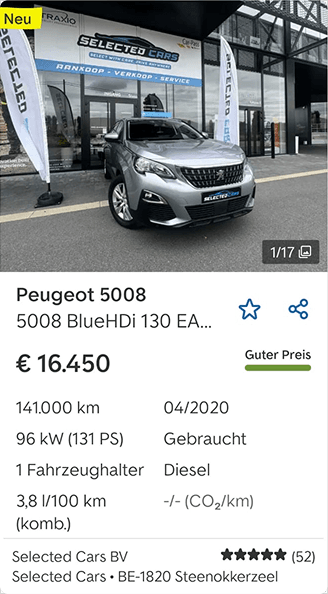
Apps kept a different balance of imagery and information
The final direction kept shared principles without forcing one universal card. Apps retained a different mix of image emphasis and details because the evidence and interaction context differed from web.
Before
After

Outcome / Impact
Evidence and rollout
The team had enough evidence to move toward a cleaner card, with platform-specific limits. Early mWeb tests favoured stronger simplification; later desktop and iOS validation showed why gallery behaviour needed separate treatment.
Early validation
Stronger simplification held up
mWeb tests favoured the more reduced card direction
The signal was strong enough to keep simplifying, but it was not the final answer. It exposed finance, partner, media, and detail-page tradeoffs for later iteration.
Platform decision
No universal card
desktop validation made No Gallery the safer web direction
Richer on-card interaction could weaken actual detail-page progression, so web and app surfaces kept different balances of imagery and information.
Rollout
Shipped across markets
the programme moved from experiment stream into rollout
The public case keeps all-market post-rollout impact generalized because the retained evidence is stronger on validation and rollout direction than exact final measurement.
Transferable signal
Product judgment under constraint
This case shows how I handle scarce attention, competing business goals, mixed evidence, list-page versus detail-page tradeoffs, and cross-platform delivery while preserving platform differences.
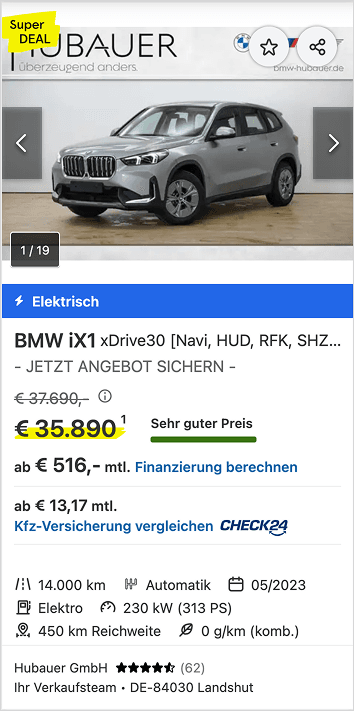
Mobile Web
The same declutter logic had to hold up in tighter space
On mobile web, the reduced card made comparison cues easier to read within tighter space and forced sharper decisions about which signals deserved prominence.
Before
After
Reflection
What this project clarified
Simplification held up only when the team named what the card should optimise for, what the detail page should carry, and which measures deserved trust.
High-traffic marketplace surfaces get clearer when teams define the buyer decision, choose the right progress measures, split jobs cleanly between surfaces, and let platforms diverge when the tradeoffs differ.