Case Study · AutoScout24 · Search & Discovery
New Search
New Search reset how buyers narrow complex car inventory across app and web. I led the app filter direction and helped shape the cross-platform baseline after earlier validation exposed a weak search model. The work gave buyers a clearer way to scan, refine, and return to results across one of AutoScout24's highest-value journeys.
- Role
- Principal Product Designer leading the app search/filter direction across a staged app-and-web reset
- Scope
- iOS, Android, desktop, mWeb
- Signal
- Mixed earlier validation led to a stronger baseline
- Proof
- Research, experiments, and platform-specific rollout evidence
Weak direction reset
Reset after evidence
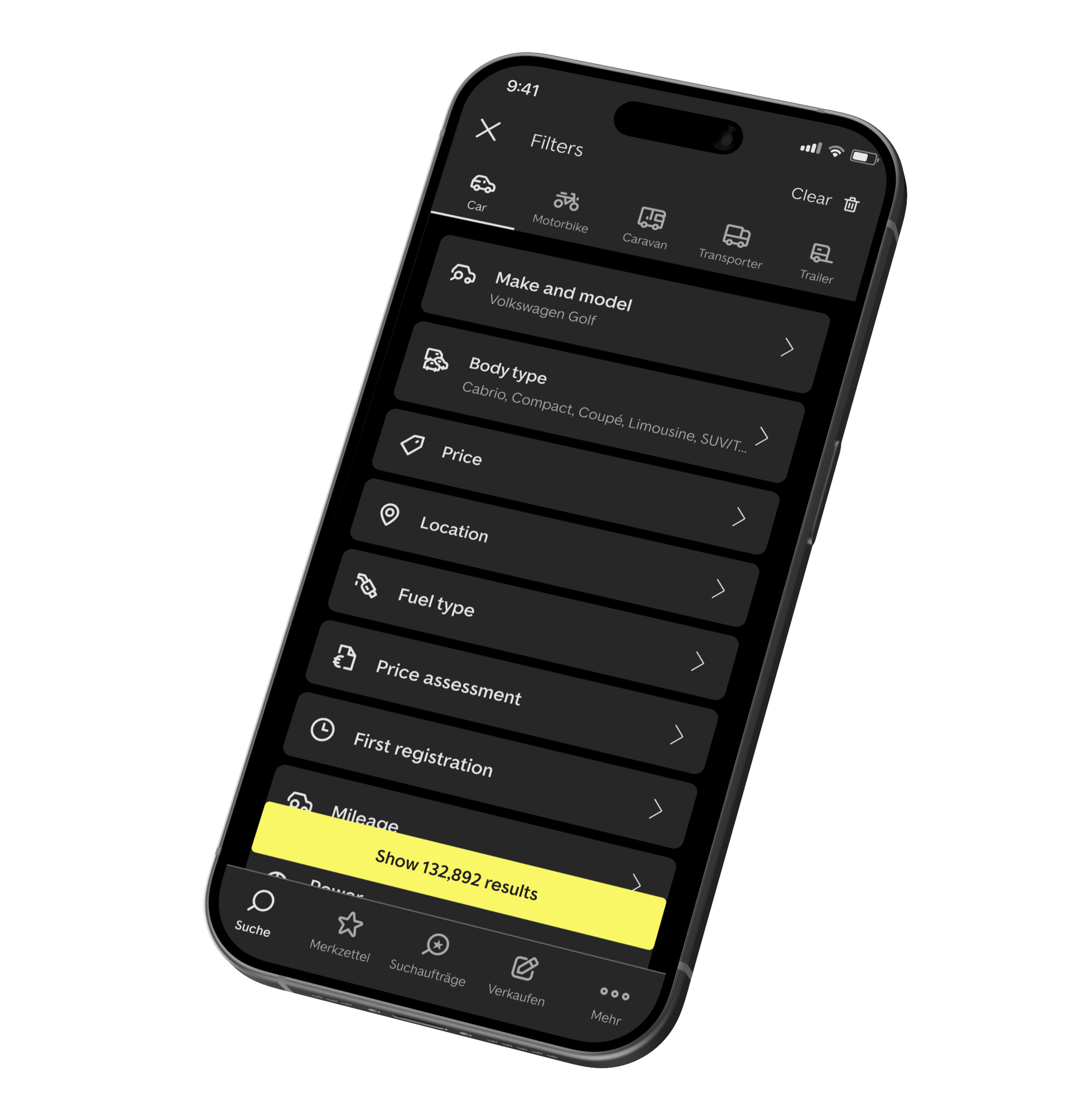
Earlier app validation exposed a weak direction. We rebuilt the baseline around a scan-then-dive filter model: clearer grouping, reusable inputs, and reviewable selections before buyers returned to results.
iOS benchmark and rollout
iOS signal
iOS gave the team its cleanest validation signal: about +6% leads from the list page, with detail-page engagement stable, before broad rollout.
Platform judgment
Adapted by surface
Android and web extended the same product model with narrower evidence. We adapted save behaviour and rollout scope by platform, then shipped web as a simpler baseline the team could build on.
Overview
A staged reset, not one clean launch
This initiative moved through different levels of evidence by platform, so the case study works best as one programme around what buyers were looking for, filter discovery, and return paths rather than one uniform redesign story.
A weaker app direction forced the reset. iOS became the first clear validation point, Android moved through research and validation, and web launched later as a narrower baseline.
That sequencing mattered. The goal was not to force identical behaviour across surfaces, but to establish a search model each platform could support credibly and then ship where the evidence was strong enough.
Because the full performance picture is confidential, I focus on evidence I can share: research, experimentation, and post-launch analysis showed positive movement in key commercial progression signals on the strongest surfaces while downstream engagement stayed broadly stable.
Reset at a glance
Before reset
Reset baseline
Product Judgment
What this work proves
My job was to help turn buyer needs, product constraints, and platform differences into a baseline teams could test and extend.
- Buyer clarity: helped people express what they were looking for without making the filter system feel heavier.
- Search systems: clarified hierarchy, taxonomy, selection management, and return-to-results behaviour.
- Evidence discipline: reset the direction after weak validation and used the strongest signals to sequence rollout.
- Platform judgment: aligned the product model across surfaces while adapting interaction details by platform.
- Commercial awareness: connected buyer clarity to list-page progression and enquiry paths without overstating causality.
Strategic Foundation
The reset originated in a strategic vision for the buyer experience
New Search did not start as an isolated UI redesign. It came out of earlier strategic work that clarified what the buyer journey needed to do better across search and decision-making surfaces.
Before this reset moved into execution, I was part of the upstream buyer-side vision work that helped reframe the experience around guidance, selection, and trust. That work brought together research synthesis, market review, concept development, and stakeholder alignment across search, list, and detail surfaces. It gave the team a clearer strategic foundation for what a stronger buyer journey should do, and New Search became one of the clearest downstream expressions of that direction.
For this case study, I am not treating that broader work as a separate product launch or claiming sole ownership of it. I am including it because it materially shaped the problem framing, design principles, and cross-platform baseline decisions that followed.
The Problem
Why search needed a reset
This was not a cosmetic redesign. Friction in search was affecting both the buyer experience and a key commercial funnel, and the existing direction no longer had the evidence to justify incremental improvement.
- Search sat close to one of the marketplace's most valuable moments: moving from browsing to enquiry. When filtering was hard to use, buyers had a harder time finding relevant cars and the path to enquiries weakened.
- The reset was triggered by evidence, not preference. Earlier validation showed the existing app direction underperforming on core enquiry signals, which made another cleanup pass hard to justify.
- Apps had the weakest starting point: earlier and intermediate input patterns were inconsistent, filters were hard to find, and the inherited direction still did not create a strong enough baseline.
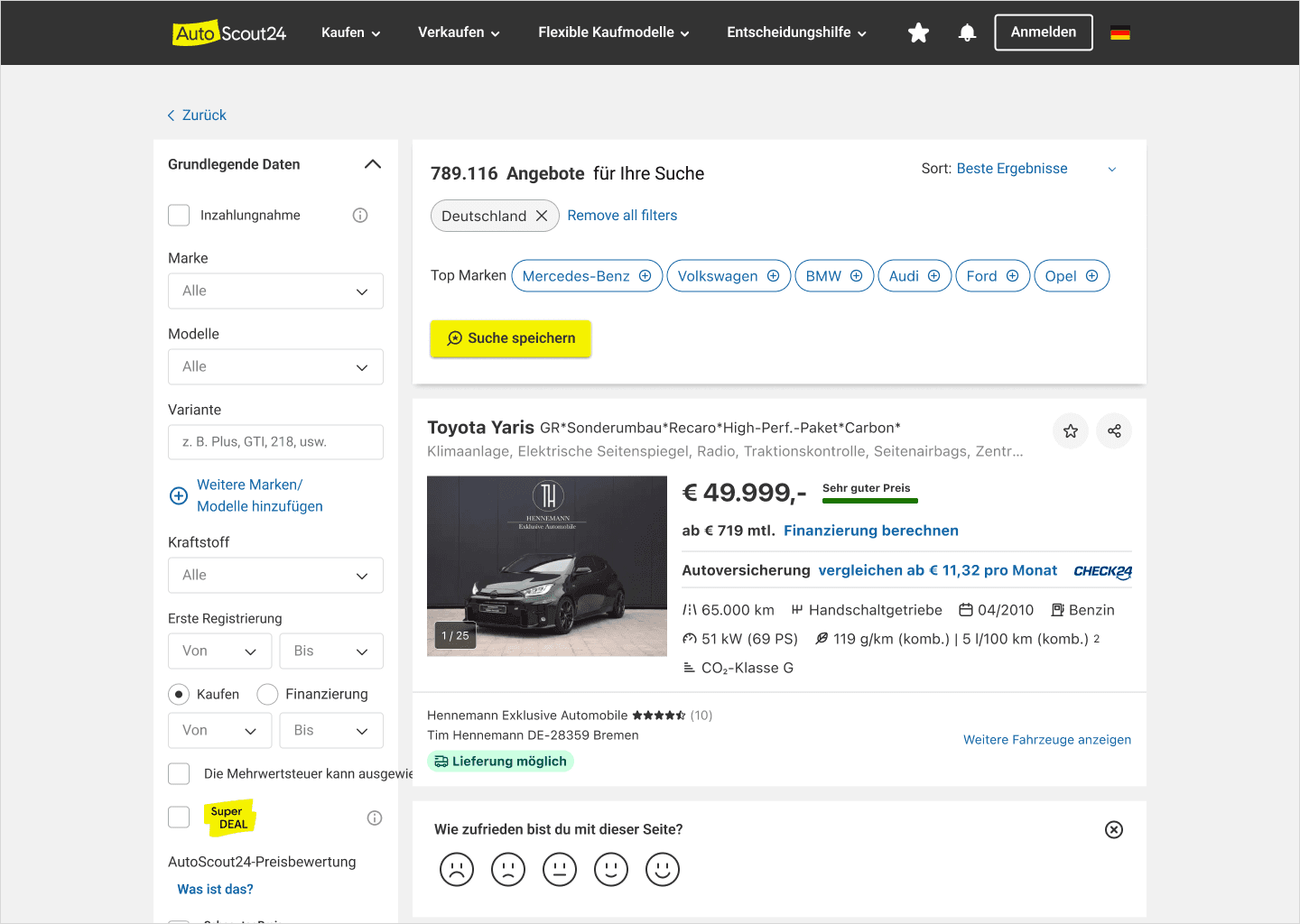
- Web had its own status quo: a denser filter model with weaker upfront hierarchy, more scrolling, and less clarity on how to scan first before going deeper.
- Cross-platform discovery showed the same structural issues repeating across desktop, mobile web, iOS, and Android: filters were hard to find, hard to edit from results, and not clearly organised once applied.
- Strategy work later showed that filter engagement on mobile web was shallow. That same work framed New Search as growth work tied to stronger enquiry paths.
The Change
What changed in the baseline
The high-value changes were structural: clearer filter hierarchy, stronger entry points to high-value choices, and interaction patterns the team could actually validate and roll out without hiding the inventory complexity buyers needed to express.
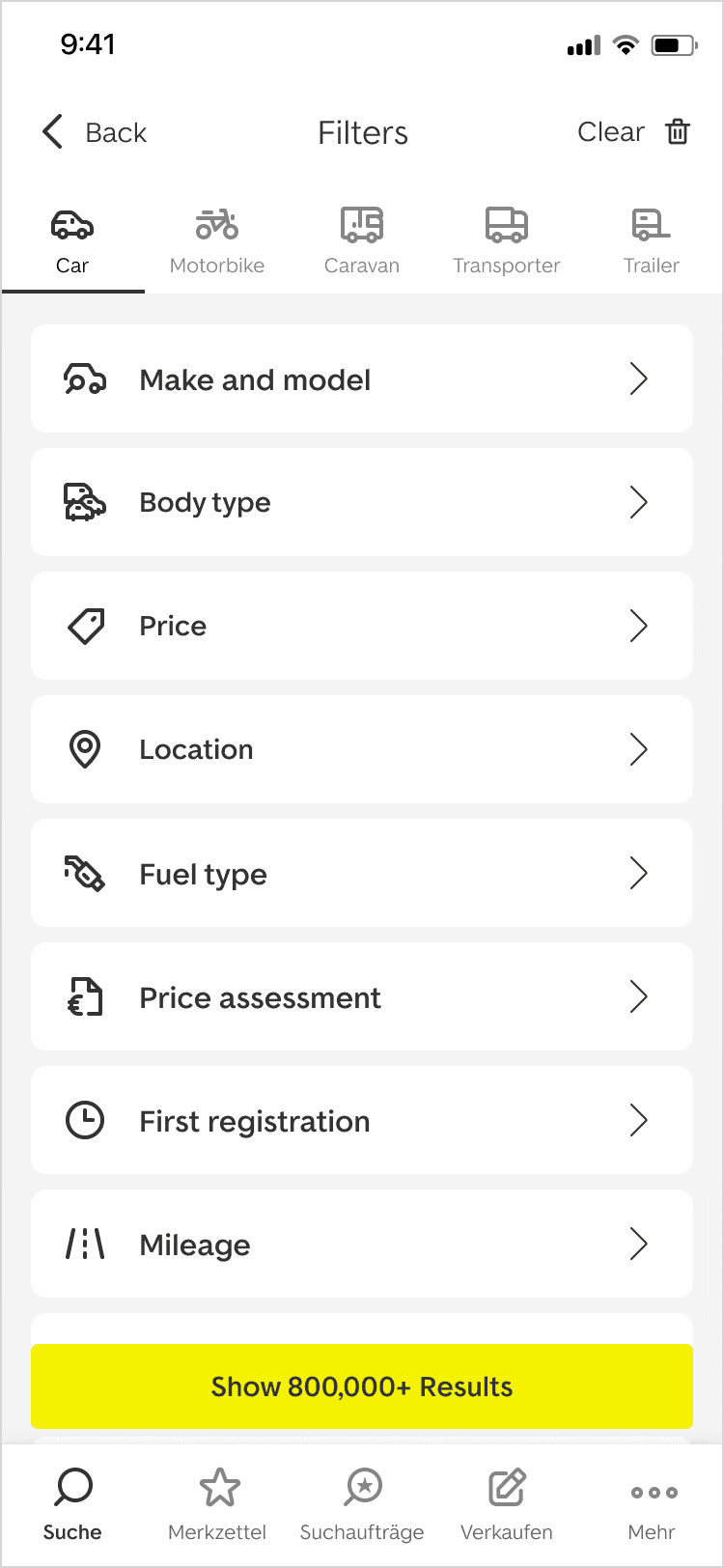
- On Apps, the reset started with a clearer filter overview: buyers could scan the system first, then dive into one section when they needed more control.
- We grouped filters around reusable patterns, made key choices easier to discover, and cleaned up inconsistent input types so the system felt easier to learn and extend.
- One important navigation tradeoff came from make/model. The logical path would have sent buyers deeper into the next make/model step, but evidence showed many wanted more filters or listings faster, so we returned them to the filter overview instead.
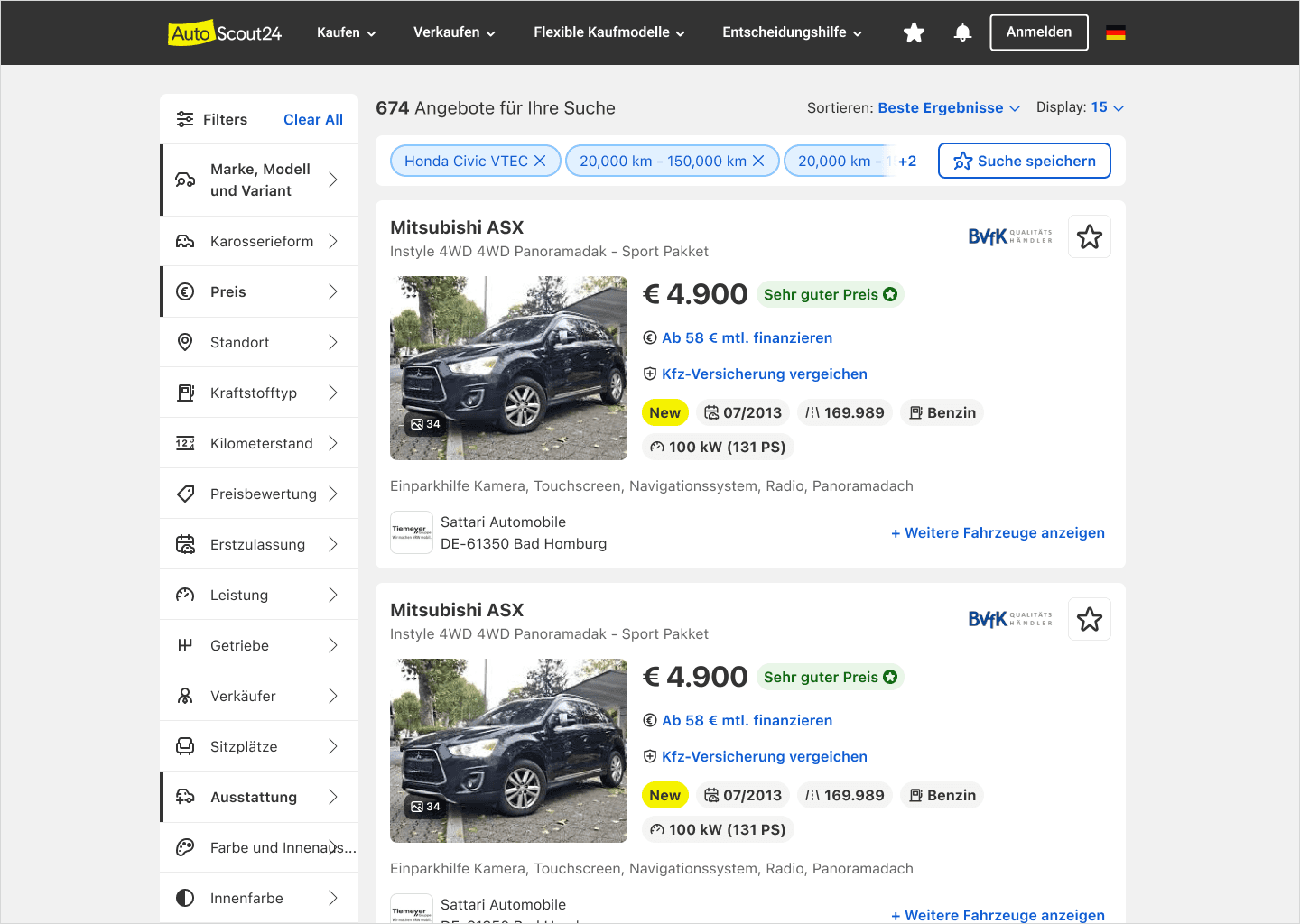
- After Apps, we moved to Web and applied the same winning principles: clearer hierarchy up front, better filter usability, and a stronger baseline adapted to Web's constraints.
- The hard part was exposing richer vehicle data while keeping the experience light enough to use. The system needed to support what buyers were looking for without turning every search into configuration work.
- The baseline was adapted rather than cloned: Android moved toward platform-appropriate save behaviour with extra clarity work still needed, while web launched a narrower baseline first and deferred richer enhancements until later.
Important workstream
New Make & Model
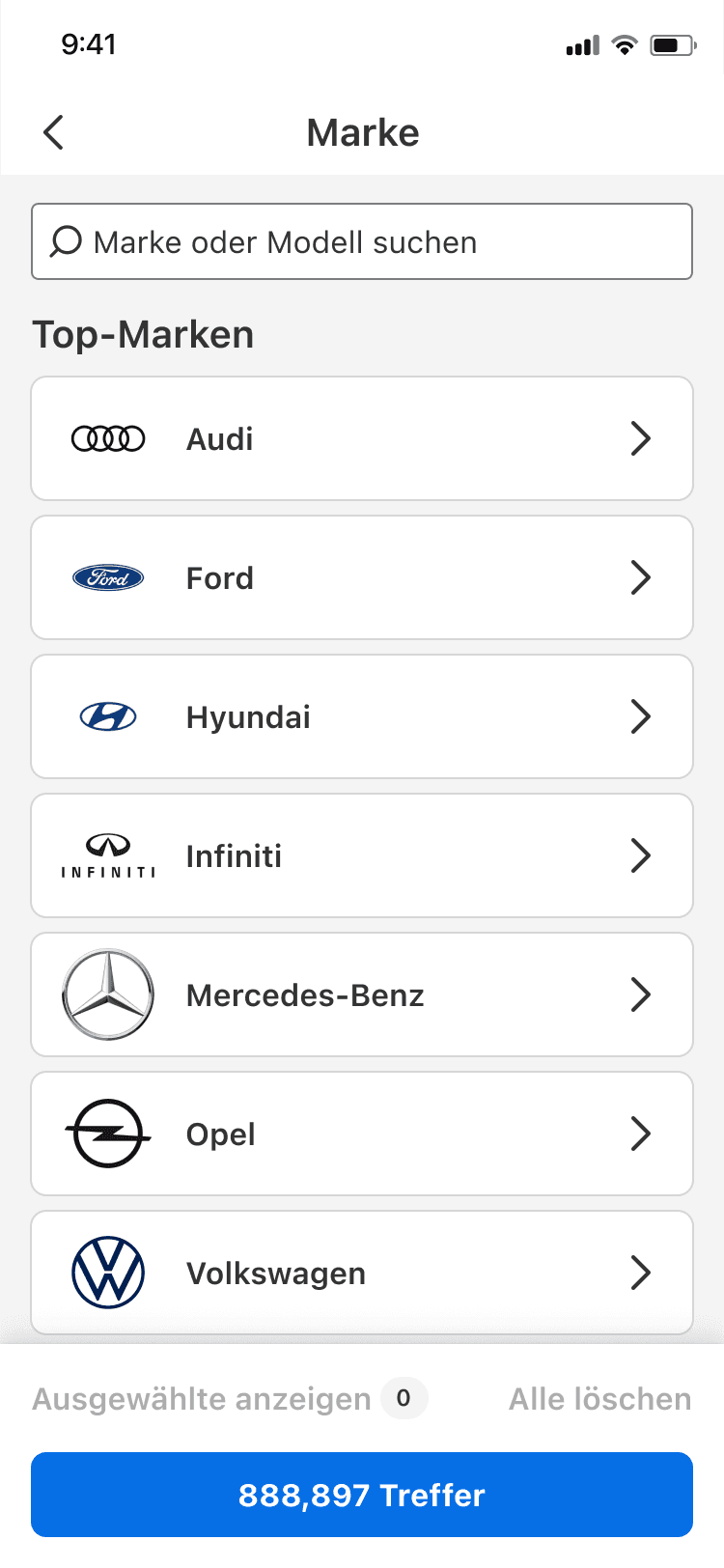
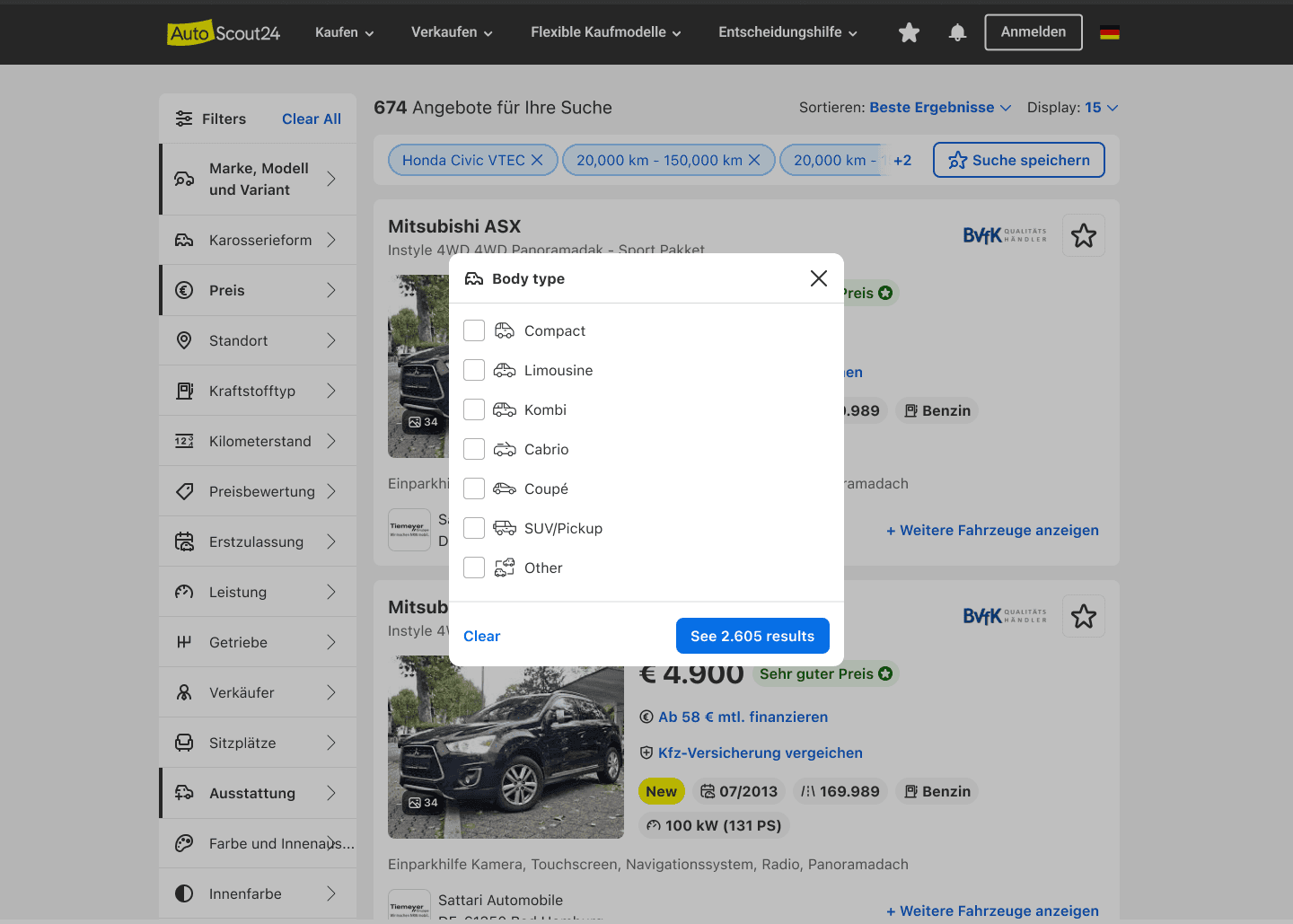
New Search moved make/model earlier in the filter and established the modal pattern buyers used to refine one decision at a time. That baseline later became the starting point for a deeper vehicle hierarchy.
I led the buyer-facing design as the follow-on project moved from dropdowns to grouped search and browsing. Product, research, and engineering partners shared the testing and rollout work.
Annotated decision
Old problem
The old make-to-model path assumed a simple hierarchy and buried one of the clearest signals of what buyers wanted too late.
Design move
I pushed make/model earlier and explored search, drilldown, grouped dimensions, and clearer selected-state management.
Tradeoff
Navigation consistency mattered, but user behaviour showed that this filter needed a faster path back to the overview.
Why it mattered
A clearer entry point gave buyers a faster path to relevant inventory and gave the team a cleaner model to test.
Desktop interaction state
My Role
What I owned, influenced, and shared
My role was strongest in the app filter direction and the product decisions around the baseline. I separate direct ownership from shared team outcomes because the evidence and rollout were collaborative.
- Directly drove: app filter information architecture, the main filter overview, filter-entry hierarchy, make/model placement, and completion behaviour across iOS and Android.
- Influenced: cross-platform baseline decisions with product, research, engineering, analytics, and another senior designer as the direction moved into web.
- Why I pushed it: make/model carried a strong signal of what buyers were looking for, while the old structure asked people to manage too much filter depth too early.
- Framed the reset as both a product and people tradeoff: the team had invested in an intermediate direction, but the evidence showed we needed a cleaner baseline.
- Framed risk: helped move the team away from a weak earlier direction and toward a baseline we could test, launch, and extend.
- Shared outcomes: research, experimentation, rollout, and commercial results were team-owned, so I treat them as shared evidence rather than personal attribution.
Key Decisions
Five decisions changed the trajectory
This is the clearest representation of the work: when to reset, how to structure the new baseline, where to trust user behaviour, and where not to flatten real platform differences.
Decision 01 in practice
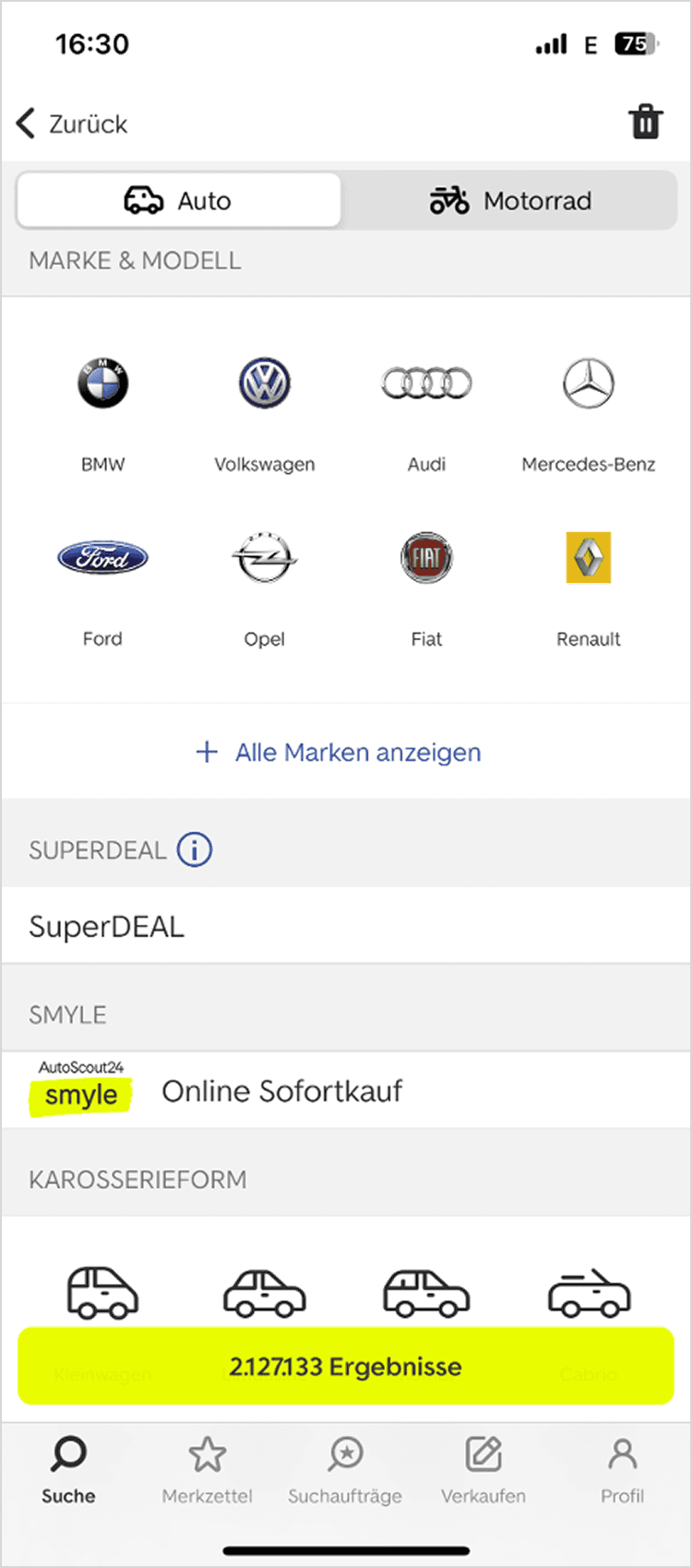
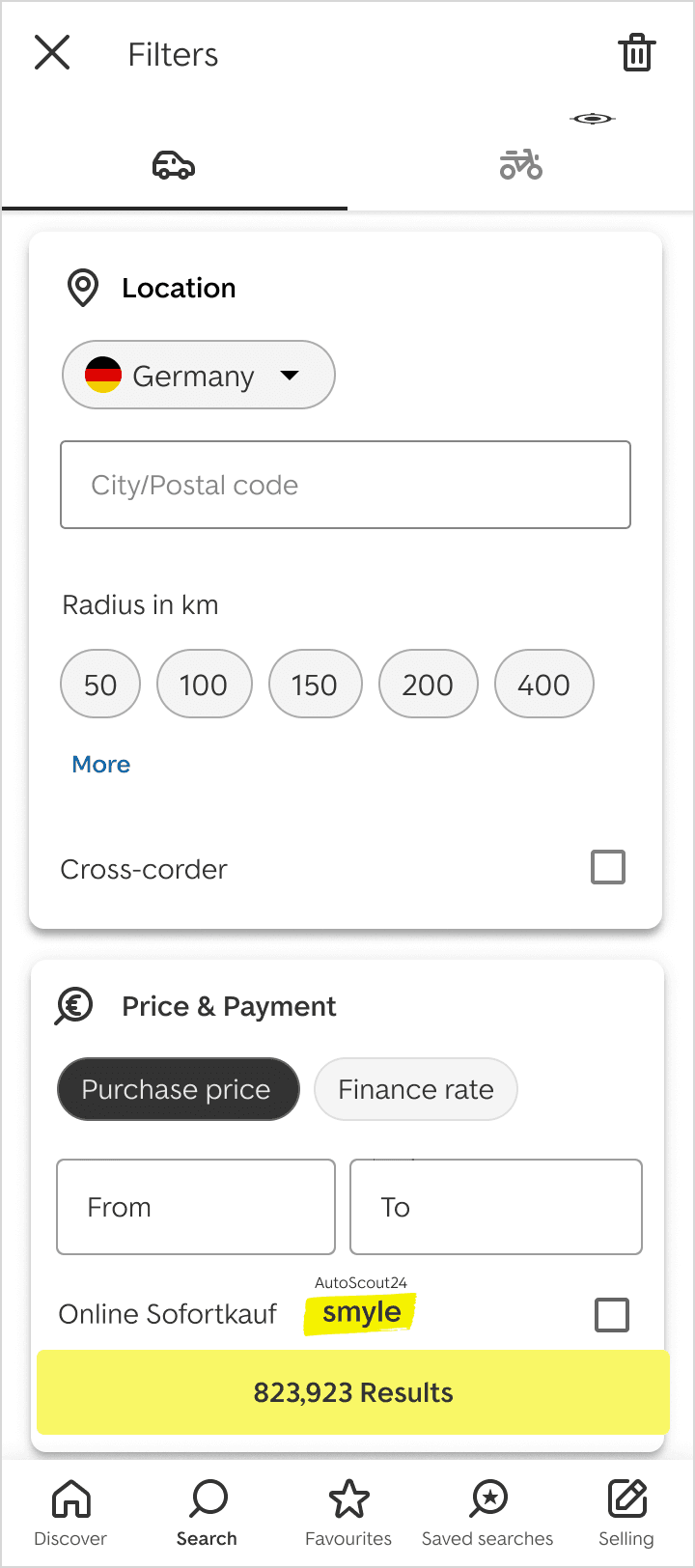
Legacy baseline, intermediate direction, stronger reset
Buyers met too much filter structure before they could clearly scan what was available. The reset brought high-value narrowing decisions forward, made selected filters easier to review, and gave the team a cleaner model to validate.
Legacy baseline
Intermediate direction
Stronger baseline
01
Reset the baseline instead of polishing a weak direction
Earlier app validation weakened confidence in the existing direction. We reset the filter model, reduced structural complexity, and handled the human side of moving away from work the team had already invested in.
02
Build the app template around scan-then-dive
Apps became the hard reset. We made the overview clearer, grouped filters around reusable patterns, improved discoverability, and gave each filter section enough surface area for better inputs and future testing.
03
Follow the desire path in make/model navigation
The logical path would have sent buyers deeper into make/model, but behaviour showed many wanted more filters or listings faster. We preserved the broader navigation model while making an intentional exception for this high-leverage filter.
04
Validate the new direction where the evidence was strongest
iOS became the first clean validation point. The redesigned baseline moved commercial progression signals in the right direction while maintaining downstream engagement.
05
Adapt the baseline by platform and ship web in stages
We adapted the same product model to each surface. Android evidence supported the direction more narrowly, while web shipped later as a simpler baseline with richer enhancements deferred.
Outcomes / Impact
A stronger search baseline across platforms
New Search gave buyers more clarity while searching and gave AutoScout24 a stronger foundation to build from. iOS validated the direction most cleanly; Android and web extended the model with narrower evidence, so the result reads as a staged product-system outcome rather than one uniform launch story.
iOS
Strongest validation
The iOS benchmark selected the new direction and later rollout evidence confirmed broad launch across AutoScout24 markets and white labels.
Android
Supporting signal
Android supported the same direction through narrower evidence. Research and validation favoured platform-appropriate save behaviour, but the available evidence is less complete than the iOS story.
Web
Phased baseline
Web launched later as a simpler baseline. Post-launch analysis indicated positive movement on key progression signals while mobile web and downstream engagement stayed broadly stable.
Broader strategy work around New Search modelled larger upside and tied the programme to stronger enquiry paths. I treat that as business-case context rather than delivered outcome. The delivered story is tighter: the team replaced a fragmented search model with a clearer baseline, validated the strongest surface first, and carried the direction across platforms with evidence calibrated to each surface.